Northern Lights Explained: Fascinating Myths and Scientific Facts

The Northern Lights, or Aurora Borealis, are one of nature’s most magical phenomena. Dancing across the Arctic sky in green, purple, and pink waves, they’ve inspired stories, legends, and awe for centuries. But with the myths come questions like what is true, and what’s just folklore?

When to See the Northern Lights

The Northern Lights are visible in the Arctic during the dark, clear nights of winter. In Finland, the season typically runs from late August to early April, with the peak months being October to February when nights are longest. Clear skies and minimal light pollution give you the best chance to witness the show.

How the Northern Lights Are Formed

The Northern Lights are magical but not magic, they’re science at work! They occur when charged particles from the sun collide with gases in Earth’s atmosphere. These collisions happen mostly near the Earth’s magnetic poles, which is why the Aurora is strongest and most visible in high-latitude regions like Lapland, northern Norway, Sweden, and Finland. Simply put, the farther north you go, the more likely you are to see them, while places closer to the equator rarely experience these magical displays.

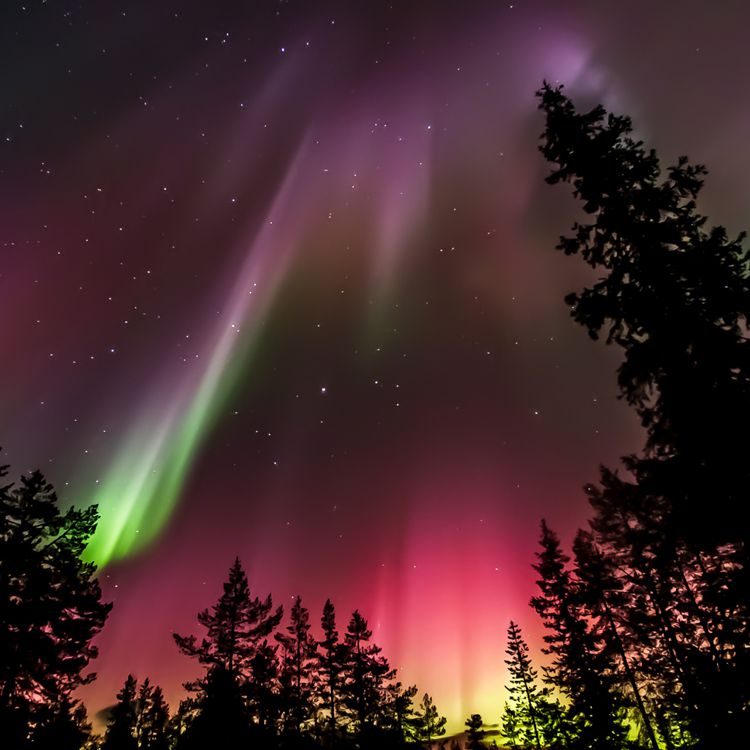
When the particles meet the atmosphere, they create bursts of light in different colors:

  • Green – oxygen at lower altitudes
  • Red – oxygen at higher altitudes
  • Purple/blue – nitrogen

The result is the mesmerizing, shimmering display we all admire.
Northern Lights Tour by Minibus

Finnish and International Myths

The Northern Lights have inspired stories around the world, with Finland having some of the most charming legends.

  • Finland: The Aurora is called revontulet, which means “fox fires” in English. According to folklore, a magical Arctic fox runs across the snowy landscape, sweeping sparks into the sky with its tail.
  • Sweden: Some believed the lights were spirits of the dead dancing in the sky, or omens of war.
  • Norway: The Aurora was thought to be burning torches used by the gods.
  • Iceland: Some myths say the lights could heal sickness or bring good fortune.
  • Native American tribes: Many saw the Aurora as the spirits of ancestors, guiding and protecting their people.

While these are myths, they show how the Northern Lights have captured human imagination for centuries, adding a layer of magic to the scientific explanation.

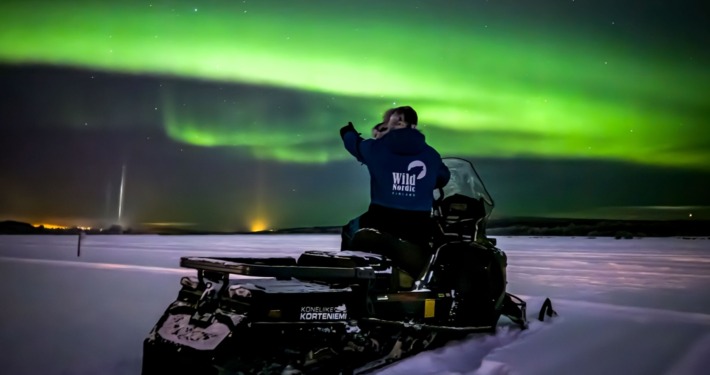
Snowmobile Safari to Search for the Northern Lights by Wild Nordic in Rovaniemi Finland

Fascinating Facts About spotting the Northern Lights

The Northern Lights are full of surprises, and knowing a few facts can make your experience even more memorable.

  • Timing matters: The lights are most visible during the dark autumn and winter months. While the peak activity usually occurs between 8 PM and 3 AM, you can see the Aurora anytime it’s dark enough, so even earlier in the evening. In fact, we’ve spotted the Northern Lights as early as 5 PM right from our office!
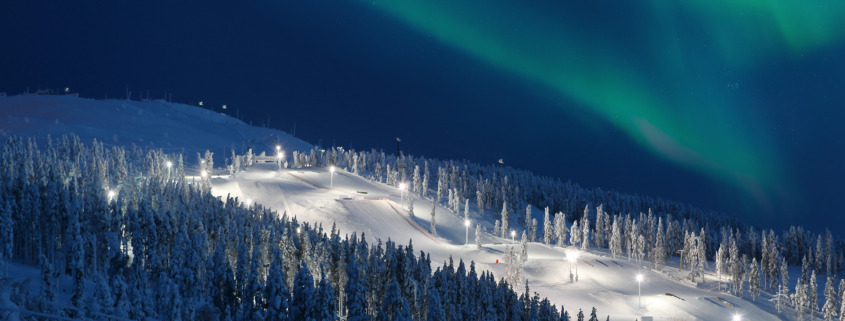
  • Location is key: The Aurora are the strongest near the Earth’s magnetic poles, which is why Lapland, northern Norway, and northern Sweden are prime viewing spots. The farther north you go, the more spectacular the display. Both Rovaniemi and Levi are above the Arctic Circle, making them ideal places to see the Northern Lights. For the best experience, try to get on top of a fell or out by a lake and look north. Even a short walk away from city lights can make a big difference.
  • Variety in the show: No two displays are exactly the same. Sometimes the lights drift gently across the sky, but other times, they swirl, ripple, or explode in bright, fast-moving waves.
  • Colors depend on altitude: The dazzling greens, reds, and purples come from different gases in the atmosphere reacting with the solar particles. Green is the most common color and often dominates the display. Red appears at higher altitudes and is much rarer, creating a truly special and dramatic effect when it shows up. Purple or blue tones come from nitrogen and are also relatively uncommon, adding extra magic to particularly strong displays. Seeing red or purple in the sky is a rare treat that makes any Aurora experience unforgettable.
  • Unpredictable but thrilling: Scientists can track solar activity and forecast periods when the Northern Lights are more likely to appear, but the exact timing, intensity, and shapes of the Aurora remain partly unpredictable. This unpredictability keeps every Northern Lights experience fresh, exciting, and uniquely memorable, making it feel like a natural surprise waiting just for you.
  • Cultural inspiration and Aurora tourism: Beyond the science, the Northern Lights have inspired legends, myths, and folklore across the Arctic and beyond, making each viewing feel like stepping into centuries of human wonder. In Finland, Sweden, Norway, Iceland, and among Native American tribes, the Aurora has been seen as everything from magical fox fires to guiding spirits.

Today, Northern Lights tourism is a big draw for Arctic regions, but it’s important to manage expectations. The Aurora is a natural phenomenon, which means that it can’t be guaranteed, and factors like weather, cloud cover, and solar activity all play a role. While guides and experts can increase your chances of seeing the lights, the experience is as much about the journey, the landscapes, and the stories as it is about catching a perfect display. Appreciating the unpredictability and embracing the magical atmosphere of the dark nights in Lapland is part of what makes Aurora viewing so special.

Experience the Northern Lights in Rovaniemi and Levi

Seeing the Northern Lights in person is unforgettable. Our Northern Lights tours in Rovaniemi and Levi give you the best chance to witness them safely and comfortably. With experienced guides who know the local spots and a team passionate about the Arctic, your adventure will be magical from start to finish.

We’d love to help you find the perfect Northern Lights experience and share the magic of the Arctic sky with you. Contact us to start planning your adventure!